Narrative Report: Local-Level Education Stakeholders Meet
Project Name: Promoting Gender Equality and Social Inclusion in Schools Building on What Children Value and Aspire to Do and Be
Event Summary:
Reported By: Md. Nazmul Hossain
Name of the Program: Local-Level Education Stakeholders Meet
Milestone 2: Local Level Education Stakeholders Meet: Initial dialogues with local level key stakeholders (Personals of NGOs working with children, municipality heads, school headmasters, teachers and parents)
District: Cox’s Bazar
Date of the meeting: 16th October 2024
Place: Conference room, Cox’s Bazar Sadar
Number of participants: Total – 25 (Male: 17; Female: 08)
Chief Guest: Honorable Upazila Nirbahi Officer(UNO), Cox’s Bazar Sadar
Overview:
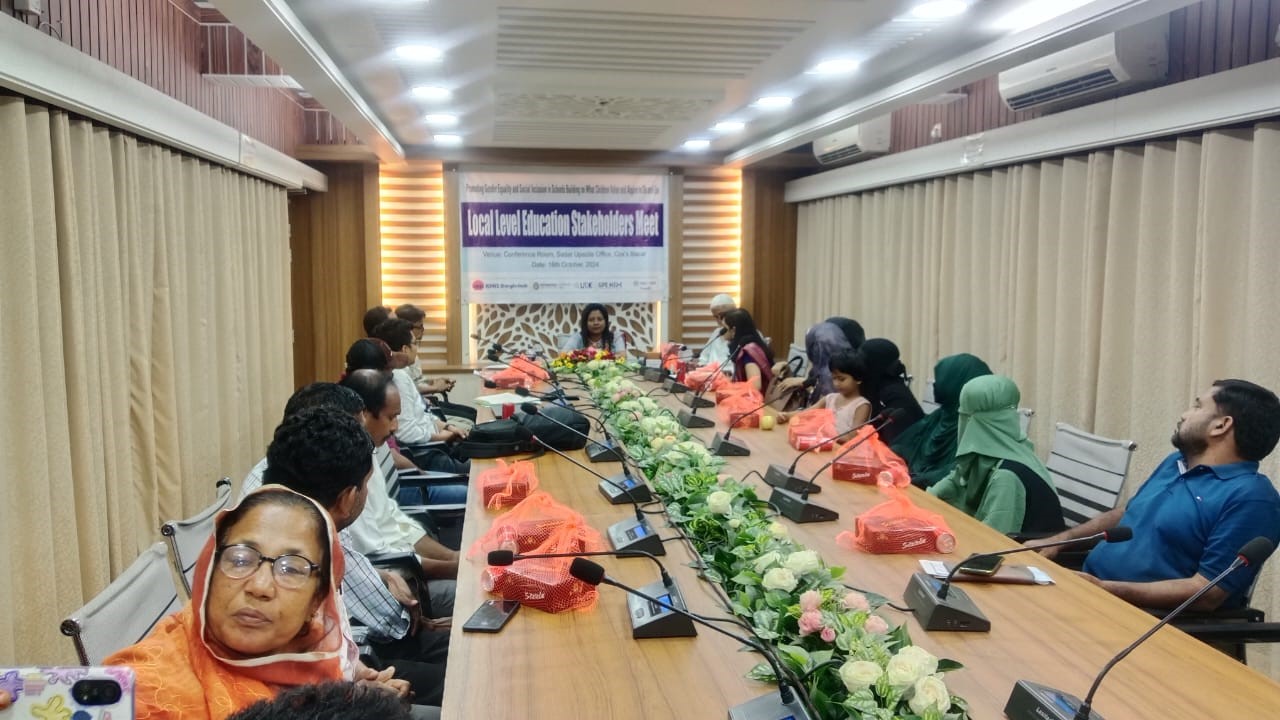
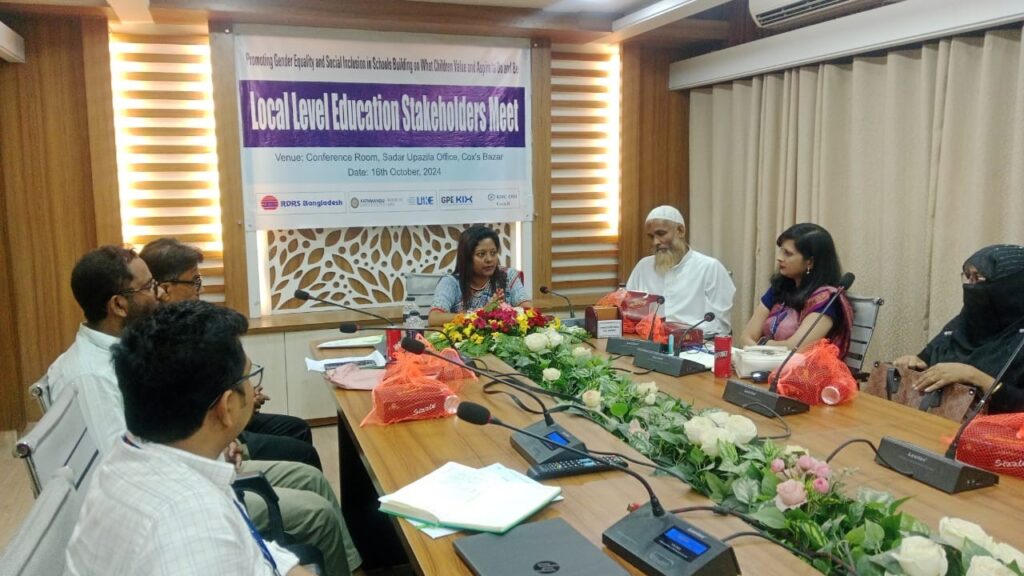
RDRS Bangladesh, a non-governmental development organization arranged a significant meeting titled Local Level Education Stakeholders Meet On 16th October 2024, in Sadar Upazila conference room, gathering 25 key stakeholders and office staff, including Upazila Nirbahi Officer, Upazila Education Officer, School headmasters, NGO personnel working with children as ESDO officer and Aparajita officer, social science teachers, and parents. Out of the 25 participants, 8 were female, and 17 were male, representing a diverse group concerned with the future of education in the region.
The meeting commenced with a welcome speech from the Project Manager of RDRS Bangladesh, who highlighted the importance of collective efforts to improve education in Cox’s Bazar. The speech emphasized collaboration between schools, NGOs, and the community to ensure inclusive and equitable educational opportunities for all children.
A Research Associate from RDRS Bangladesh led an engaging presentation that introduced the organization’s work, explained GESI concepts in the Bangladeshi context, and shared relevant findings regarding local education. The presentation laid the groundwork for the discussions that followed, raising awareness about the role of local-level stakeholders in supporting gender equality and social inclusion.
Guest Reflection in Brief
The event was marked by the presence of Chief Guest Upazila Nirbahi Officer (UNO) Nelufa Yesmein Chowdhury, who delivered a profound and insightful speech. She highlighted the critical role of research in advancing educational initiatives and emphasized the need for comprehensive development of schools. Key priorities mentioned included:
- Planting trees in school compounds to enhance the environment.
- Building and maintaining clean and adequate toilet facilities.
- Filling playgrounds to ensure safe recreational spaces for students.
- Installing fans and railings to improve school infrastructure and safety.
- Taking all necessary steps to keep schools safe and conducive for learning.
She stressed the importance of coordinated efforts between schools and NGOs for the holistic development of educational institutions.
Upazila Education Officer Md. Jobrut Khan also addressed the audience, urging all stakeholders to work together and foster a gender-sensitive school environment. He emphasized the need for cooperation among school management, local authorities, and NGOs to ensure that schools become inclusive and supportive spaces for all children, especially girls.
Stakeholder Contributions:
NGO Representatives: Shared their experiences of working with marginalized children and emphasized the need for gender equality across all sectors. They also stressed the importance of educating women and the value of technical education.
School Headmasters and Teachers: Focused on infrastructure improvements, teacher training, and access to resources. They also highlighted GESI issues, noting how gender disparities and social exclusion negatively affect the school environment and student engagement.
Parents: Expressed their concerns about school safety, particularly for girls. They emphasized the need for clean drinking water, school boundaries, and over-bridges for safer access. Their concerns highlighted gaps in the infrastructure that hinder school safety.
Reporter Observations: A local reporter shared additional insights, including the need for increased school assemblies, gatekeepers to ensure security and awareness campaigns for girls’ safety. The reporter emphasized the importance of keeping school environments secure and supportive, especially for vulnerable student groups.
Conclusion: The Local-Level Education Stakeholders Meet provided a valuable platform for discussing the challenges faced by schools in Cox’s Bazar, especially related to gender equality and social inclusion. Through this dialogue, participants gained a better understanding of the critical role they play in shaping inclusive, safe, and supportive school environments. Moving forward, the collaboration between local authorities, schools, NGOs, and parents will be essential in overcoming these challenges and ensuring equitable education for all.
Follow-Up Actions:
Development of an action plan based on stakeholder input to address infrastructure, safety, and GESI issues in local schools.
Ongoing monitoring of progress and regular follow-up meetings to track implementation of initiatives discussed during the meeting.
Purpose and Objectives:
Purpose:
The Local-Level Education Stakeholders Meet was organized to create a platform for open dialogue between key education stakeholders in Cox’s Bazar. The meeting aimed to promote gender equality and social inclusion (GESI) in local schools, focusing on what children value and aspire to achieve in their educational journey. By bringing together representatives from NGOs, local government, school administrators, teachers, and parents, the event sought to identify barriers to education and discuss strategies for creating safer, more inclusive learning environments.
Objectives:
Foster Collaboration Among Stakeholders:
Encourage cooperation between schools, local authorities, NGOs, and parents to collectively address challenges related to gender equality and social inclusion in schools.
Raise Awareness on Gender Equality and Social Inclusion (GESI):
Increase stakeholder understanding of GESI issues within the educational context and how these challenges impact students’ learning and engagement, particularly girls and marginalized children.
Identify Key Challenges and Solutions:
Facilitate discussions on the barriers to creating inclusive school environments, including inadequate infrastructure, lack of resources, and cultural attitudes toward girls’ education, while proposing actionable solutions.
Promote Safe and Conducive School Environments:
Highlight the need for improved school infrastructure, such as clean toilets, safe playgrounds, drinking water, and security measures, to ensure that schools provide a supportive, secure environment for all children.
Strengthen Local-Level Commitment to Educational Development:
Engage local stakeholders in a long-term commitment to improving the quality of education through collaborative efforts, with a focus on gender-sensitive practices and overall school development.
These objectives set the foundation for ongoing efforts to create inclusive, safe, and gender-sensitive schools in Cox’s Bazar, addressing the needs of all children, especially the most vulnerable.
Photo of local-level education stakeholders meet